


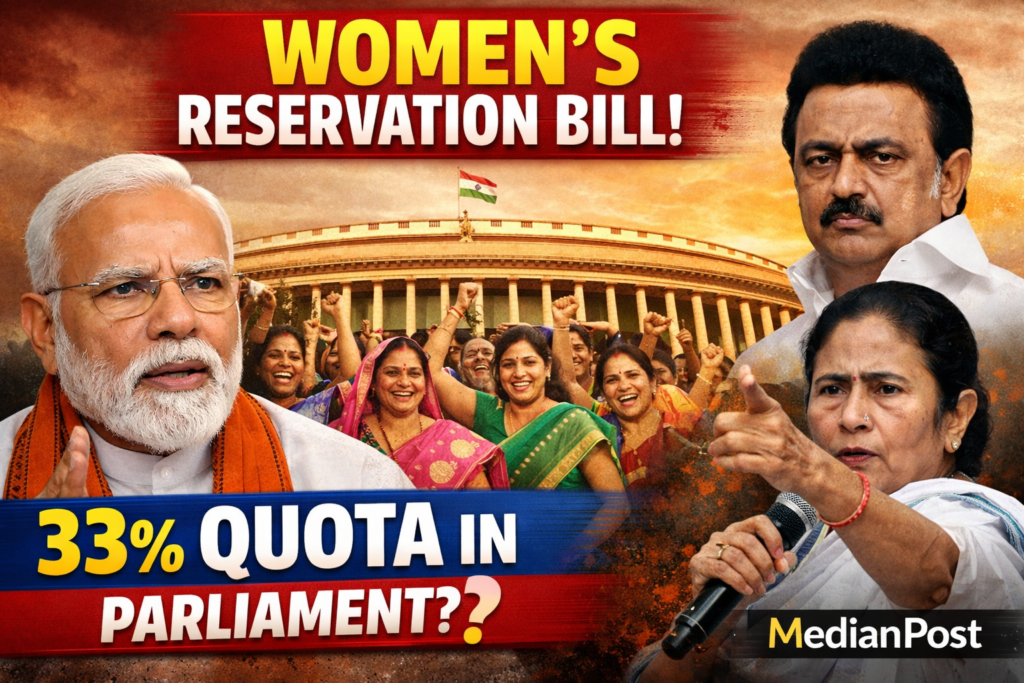
The Central government is preparing to introduce the long-pending Women’s Reservation Bill in a special session of Parliament, a move that has generated both excitement and political reactions across the country.
The bill, which proposes 33% reservation for women in the Lok Sabha and state legislative assemblies, was first announced last year by Prime Minister Narendra Modi. Since then, it has remained a key promise of the government regarding women’s empowerment.
Now, with the special session being called, the proposal appears to be moving closer to reality.
Hope and Excitement Among Women Leaders
Many women leaders and activists have welcomed the move, calling it a long overdue reform. For years, there has been a demand to increase women’s representation in politics, where their presence has remained relatively low.
Several leaders believe that this step could open doors for more women to participate in decision-making and bring fresh perspectives into governance. “This is not just about numbers, it’s about giving women a stronger voice,” one leader said.
Opposition Questions Timing
At the same time, opposition parties have raised concerns over the timing of the bill. Leaders like M. K. Stalin and Mamata Banerjee have openly criticised the move.
They argue that the government is bringing the bill now with an eye on upcoming elections, trying to attract women voters. According to them, while the idea of reservation is widely supported, the timing makes it look like a political strategy rather than a purely reform-driven decision.
Elections in the Background
The debate becomes sharper as some states are either heading into elections or have recently seen intense political activity. Opposition leaders believe that women voters could play a decisive role, and this move might be aimed at strengthening the ruling party’s position.
The government, however, has maintained that the bill is part of its long-term commitment to women’s empowerment and should not be viewed through a political lens.
A Big Step, But Questions Remain
If passed, the Women’s Reservation Bill could significantly change the structure of Indian politics by ensuring greater representation for women. Many experts see it as a landmark reform that has been delayed for decades.
At the same time, the political debate around its timing shows how even widely supported reforms can become part of electoral narratives. As Parliament prepares for the special session, all eyes will be on how the bill is introduced, debated, and whether it finally becomes law.