
What People Mean by ‘Vote Theft’ — And Why the Issue Keeps Coming Back in Indian Elections
Every election season, one word returns to political conversations: votechori. It shows up on social media, in street-corner debates and sometimes even in press conferences. But when people talk about vote theft, they are often talking about very different experiences not always about large-scale manipulation, but about everyday problems that make voters feel ignored or powerless.
For many voters, vote theft begins with a simple shock at the polling booth. A person who has voted for years is suddenly told their name is missing from the voter list. Others find mistakes in their details or see unfamiliar names listed at their address. These moments create frustration and, more importantly, doubt about whether their vote actually matters.
Small Problems, Big Distrust
In most cases, vote theft claims are not about a single dramatic incident. They grow out of small, repeated issues confusion at booths, long delays, poor communication, or lack of help for first-time voters and senior citizens. When people feel unheard or turned away on polling day, the experience stays with them.
There are also concerns about impersonation or misuse of voter data, especially in densely populated areas. While authorities say such cases are rare, even isolated incidents can fuel wider suspicion when information does not reach voters clearly.
EVMs and the Question of Trust
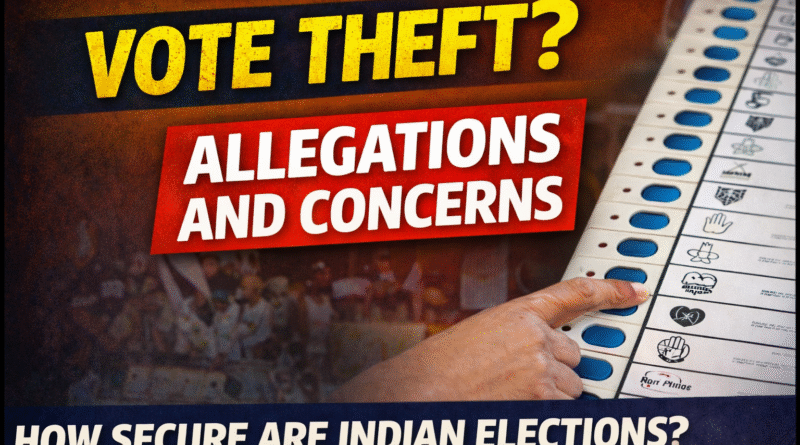
Electronic Voting Machines often become the centre of these debates. For election officials, EVMs represent efficiency and security. For some voters, however, they remain a source of doubt simply because the process feels distant and technical. The issue here is less about machines and more about trust something that cannot be built only through official statements.
What the System Tries to Do
India’s election process includes several checks: voter verification, polling agents from different parties, VVPAT slips, and surveillance at sensitive booths. On paper, these measures are meant to prevent misuse. In practice, many voters are either unaware of these safeguards or unsure how to use complaint mechanisms when something goes wrong.
Why Perception Matters
Even when allegations are not proven, the feeling of being denied a vote can damage faith in democracy. Once trust weakens, people disengage and that can be as harmful as any actual wrongdoing.
A Shared Responsibility
Addressing vote theft concerns is not just about defending systems. It is about listening, explaining and making voters feel included. Clear communication, better awareness and quick responses to genuine problems can go a long way in restoring confidence.
In a democracy, the vote is not just a button pressed on a machine it is a belief that participation counts. Protecting that belief matters as much as protecting the process itself.