
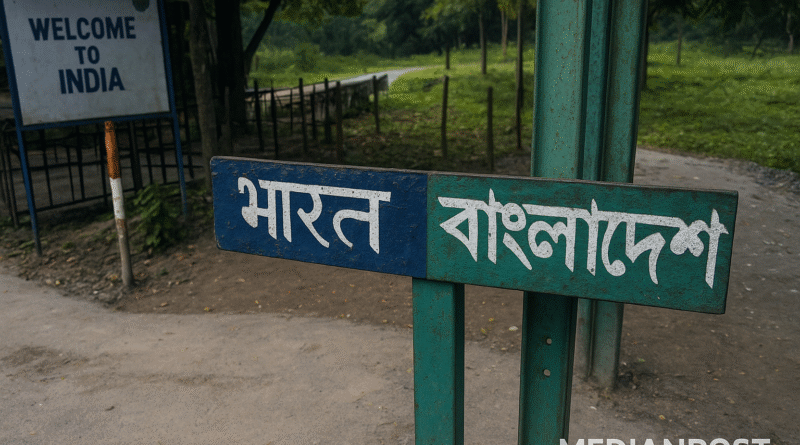
“What Happens to Bangladeshi Immigrants After They Are Arrested?”
Introduction
Every month, news of their arrest comes from near the border, but apart from these arrests, they have to go through some
difficult processes like police custody, legal battle and in some cases even deportation. So what happens to the immigrants
after they are caught?
A History of Infiltration
The flow of immigrants began in large numbers during the Bangladesh Liberation War of 1971, when nearly 10 million people
took shelter in India. While most returned after the war, many stayed behind, and fresh waves of migrants have continued
ever since. Due to the proximity of the Northeast States to Bangladesh, it remains the main entry point to take entry in India illegally.
What Happens After Arrest?
The process usually begins with police interception. Once detained, immigrants are brought before a local court, where police
seek remand for investigation. During this period, officials question them about how they entered India, whether they were
linked to criminal networks, and the reasons behind their illegal stay.
The Legal Process
Cases are then registered under the Foreigners Act and other laws. While the trial is underway, immigrants are sent to
detention centre. These facilities are meant to be temporary, but many people remain there for months or even years until
their cases are resolved.
Deportation and Its Decline
If immigrants are found guilty in court, they are prepared for deportation. This requires coordination between Indian and
Bangladeshi authorities, after which immigrants are sent back across the border.
Government data shows that deportations have fallen sharply over the years:
2009: 10,602 deported
2010: 6,290
2011: 6,761
2012: 6,537
2013: 5,235
2014: 989
2015: 474
2016: 308
2017: 51
From more than 10,000 deportations in 2009, the number dropped to just 51 by 2017. Although official data for recent
years has not been released, estimates suggest that 1,000–2,000 people are deported each year. Yet, despite these
numbers, it is believed that over 20 million Bangladeshi immigrants are still living illegally in India.
Operation Push Back
In recent years, India has begun using a new method, unofficially called Operation Push Back. Instead of long legal
proceedings, security forces directly send immigrants back across the border.
While this approach speeds up deportation, it has also angered Bangladesh’s government. Dhaka lodged a complaint
with New Delhi, prompting India’s Home Ministry to announce a 30-day verification process before push backs are carried out.