


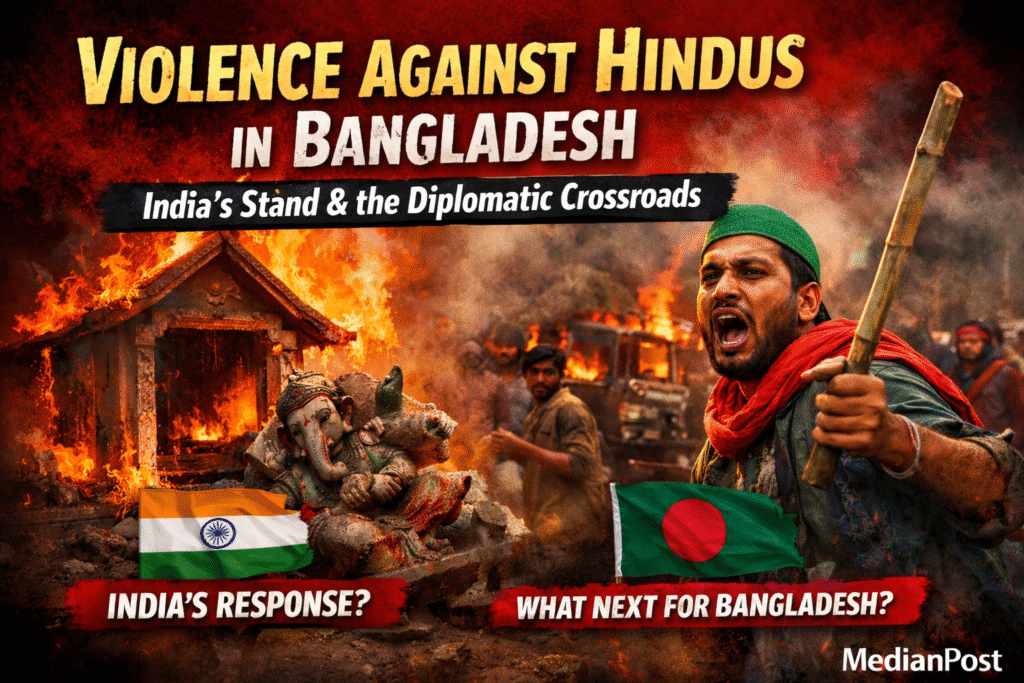
Lynching Sparks Outrage
The shocking lynching of Dipu Chandra Das, a Hindu man in Bangladesh’s Mymensingh district, has sent waves of outrage across India. Reports of attacks on Hindu homes, vandalism of temples, and targeted intimidation have stirred protests in West Bengal and Assam. Citizens and civil society groups are demanding that the Indian government take a firm stand, highlighting the urgency of protecting religious minorities in the region.
India Condemns, But Takes Measured Steps
The Indian government has officially condemned the violence. The Ministry of External Affairs (MEA) has engaged with Bangladeshi authorities, urging them to take immediate action against the perpetrators. As a precautionary diplomatic signal, India temporarily suspended visa operations in Chittagong.
Officials maintain that while Bangladesh has the primary responsibility to protect its citizens, India cannot remain silent. Historical ties, regional stability, and humanitarian concerns make minority protection in Bangladesh an issue of shared interest.
Secularism in Action, Not Silence
India’s secular identity has often been misunderstood in situations like this. Experts clarify that being a secular country does not mean ignoring religiously targeted violence. Speaking out to protect vulnerable communities aligns with the country’s constitutional commitment to human rights.
“Secularism is about equal concern for all, not neutrality when injustice occurs,” says a constitutional analyst. “India’s engagement is humanitarian, not communal.”
Voices from Civil Society and Politics
Across India, political leaders and civil society groups have called for visible measures protests, vigils, and public statements to keep the pressure on. Many suggest leveraging international platforms to demand accountability from Bangladesh. Social media campaigns have amplified these voices, ensuring that the issue remains in public focus.
Diplomatic Challenges
Yet diplomacy is delicate. India must press for justice without violating Bangladesh’s sovereignty. Experts caution that overt pressure could strain bilateral relations, affect trade, and risk domestic political backlash if the issue is politicised.
Looking Ahead
India is likely to continue a multi-pronged approach: sustained diplomatic engagement, monitoring minority safety, coordination with human rights groups, and, if needed, international advocacy. The coming weeks will be crucial in determining whether Bangladesh takes concrete action or leaves India to navigate rising domestic expectations.
A Test of Values
The crisis raises an important question: how can India uphold its secular values while defending a community abroad? According to experts, principled, consistent engagement is the answer. Speaking out against injustice reinforces India’s moral authority and demonstrates that secularism and human rights are actively defended, not just written into law.
The events in Bangladesh are more than a foreign policy challenge they are a test of India’s commitment to human rights, diplomacy, and the principle that no community should face violence unchecked.