


A Trade Decision With Deep Ripples
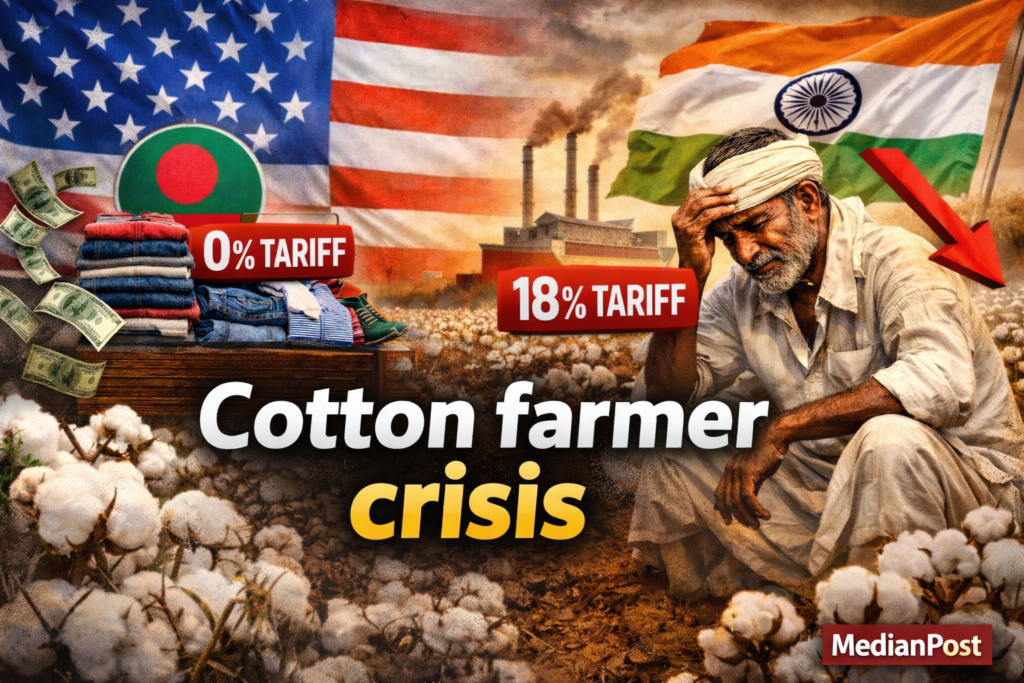
A recent tariff decision by the United States has quietly set off alarm bells across India’s textile and farming sectors. Under the new structure, ready-made garments from Bangladesh are reportedly entering the US market at zero percent tariff, while similar exports from India face an 18 percent duty.
At first glance, this may appear to be a trade policy adjustment. But for India’s cotton farmers and garment exporters, it could mean tougher days ahead.
From Garment Factories to Cotton Fields
India’s textile industry is closely tied to its cotton farmers. If Indian garments become more expensive in the US due to higher tariffs, American buyers may shift orders to Bangladesh, where products are cheaper because of zero duty.
What worries industry observers even more is the sourcing shift this could trigger. Bangladesh, which has traditionally imported cotton from India, may now find it more practical to purchase raw cotton directly from the United States. By using American cotton and exporting finished garments back to the US at zero tariff, Bangladeshi manufacturers could further strengthen their cost advantage.If that happens, Indian cotton exports to Bangladesh could decline directly affecting demand and potentially pushing down domestic cotton prices.
Industry Calls for Swift Action
India exports ready-made garments worth hundreds of crores of rupees annually to the US. An 18% tariff creates a noticeable price gap in a highly competitive global market.Textile bodies are urging the government to address the tariff imbalance through diplomatic talks and trade negotiations. Experts suggest that without timely policy intervention, the impact could travel from export houses to spinning mills and eventually to cotton-growing regions.
For Indian cotton farmers, the issue is no longer just about global trade. It is about income stability, market access, and staying competitive in an increasingly complex international textile landscape.