


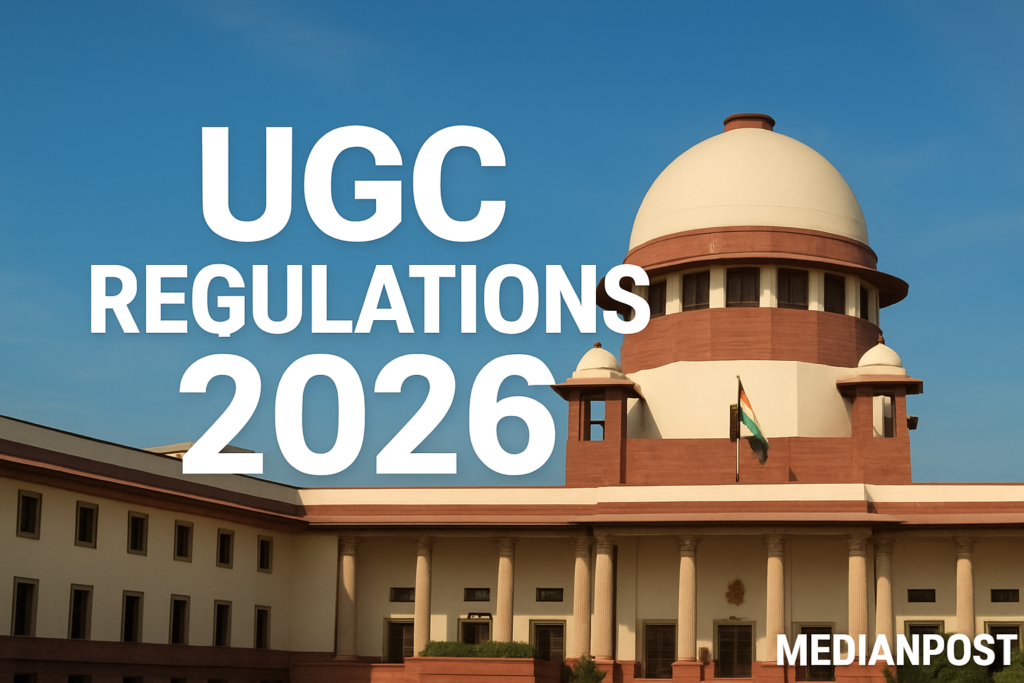
The Supreme Court has put a temporary halt on the University Grants Commission’s (UGC) newly introduced equity regulations, following protests and legal challenges from students across the country. With this interim stay, colleges and universities will continue operating under the earlier 2012 UGC guidelines until the court delivers a final decision.
What the UGC’s New Rules Proposed
The UGC, which functions under the Ministry of Education and regulates higher education standards in India, had announced the Promotion of Equity in Higher Education Institutions Regulations, 2026 earlier this month. The stated aim was to make campuses more inclusive and safer for students facing discrimination. Institutions were asked to establish Equity Committees, Equal Opportunity Centres, and structured grievance redressal systems to handle complaints related to caste, gender, religion, disability, and other forms of bias.
Why General Category Students Objected
Soon after the notification, opposition began to build — especially among students from the general or unreserved category. Critics argued that the definition of caste-based discrimination in parts of the rules mainly focused on protections for Scheduled Castes (SC), Scheduled Tribes (ST), and Other Backward Classes (OBC). They felt that general category students might not have access to the same complaint mechanisms if they experienced caste-related harassment or unfair treatment.
Concerns Over Misuse and Vagueness
Another key issue raised by students and some faculty members was the absence of clear safeguards against false or malicious complaints. There were fears that vague wording in the regulations could lead to confusion, misuse, or inconsistent action by different institutions. As the debate intensified, the matter moved from campuses to the courts, turning into a wider discussion on fairness and due process in higher education.
What the Supreme Court Said
While hearing the petitions, the Supreme Court noted that certain provisions of the new rules appeared unclear and open to broad interpretation. The bench said these aspects required closer legal scrutiny. As a result, the court ordered a stay on the 2026 regulations and allowed the 2012 framework to remain in effect for now.
What Happens Next
Further hearings are expected in the coming weeks. The outcome could significantly influence how Indian universities balance inclusion, accountability, and equal protection for all students, making this case an important moment in the evolving conversation around equity in higher education.