


From Loyalist to Rival Camp
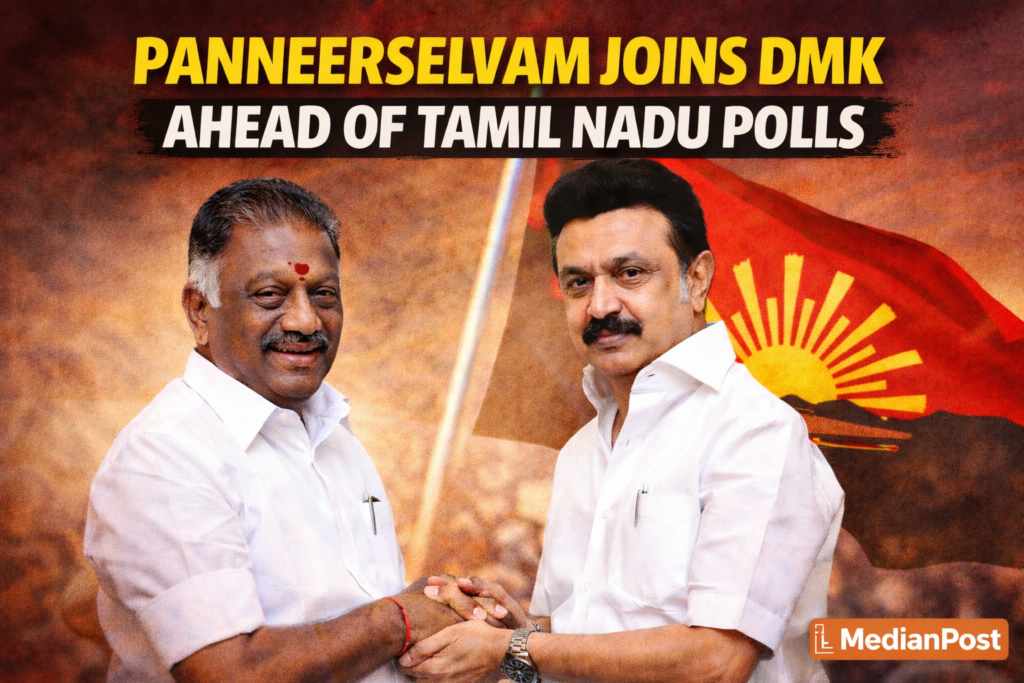
In a move that few would have predicted a decade ago, three-time former Chief Minister O. Panneerselvam has crossed political lines and joined the Dravida Munnetra Kazhagam (DMK). Standing beside Chief Minister M. K. Stalin, Panneerselvam’s induction marks one of the most symbolic shifts in Tamil Nadu’s recent political history.
For years, Panneerselvam was seen as the face of loyalty within the rival All India Anna Dravida Munnetra Kazhagam (AIADMK). A close confidant of the late J. Jayalalithaa, he stepped into the Chief Minister’s chair during some of the party’s most turbulent moments. His emotional public tribute after Jayalalithaa’s passing had once cemented his image as a devoted follower.
Years of Internal Turbulence
But politics rarely stands still. The vacuum created after Jayalalithaa’s death triggered a prolonged power struggle within AIADMK. Factional battles, leadership disputes, and shifting alliances gradually sidelined Panneerselvam from the centre of power. What began as internal disagreements eventually evolved into a visible split, weakening the party’s unified front.
His move to DMK is not merely a change of party membership; it reflects the deeper churn within Tamil Nadu’s Dravidian political space. For DMK, bringing in a leader with administrative experience and regional influence signals strategic expansion ahead of the Assembly elections.
Electoral Implications
The immediate political impact may be felt in southern Tamil Nadu, where Panneerselvam maintains personal goodwill among sections of voters. For AIADMK, the departure is both symbolic and strategic, raising fresh questions about cohesion within the party ranks.
As Tamil Nadu prepares for the next electoral battle, this realignment underscores one reality alliances and loyalties in state politics are more fluid than ever.