


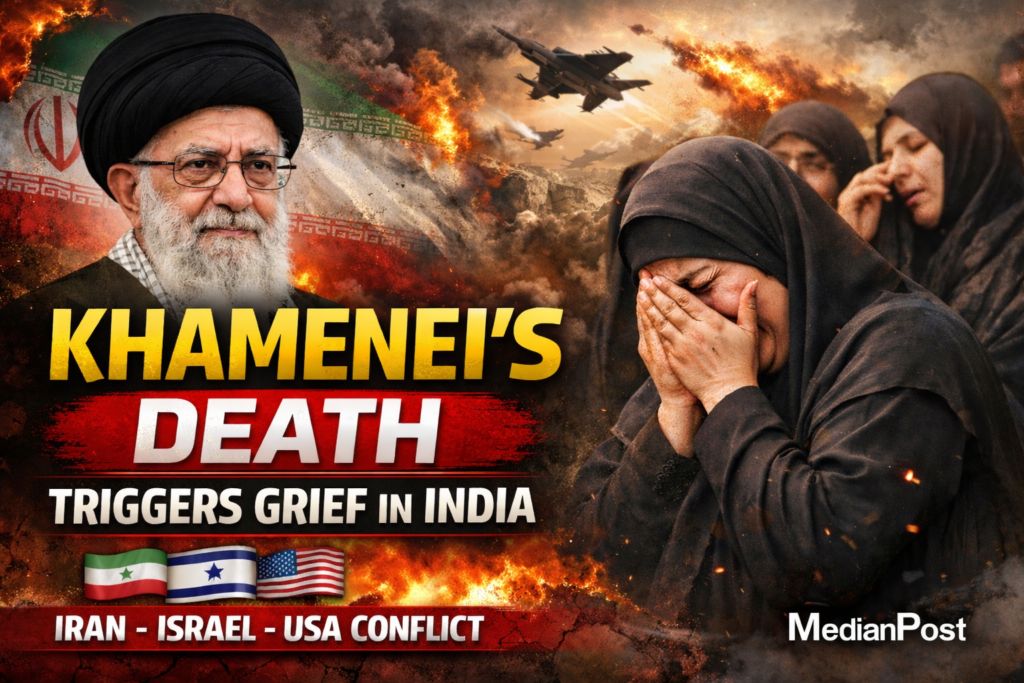
Wars are often discussed in terms of strategy, missiles, and diplomacy. But sometimes, a single development turns a distant conflict into something deeply personal. The reported death of Ayatollah Ali Khamenei during the ongoing Iran–Israel–USA conflict has done exactly that. While the fighting continues far away in the Middle East, the emotional impact of this news has reached communities in India, especially among Shia Muslims.
More Than a Political Leader
For many in the Shia community, Khamenei was not viewed merely as a political authority. He was seen as a religious guide whose speeches, statements, and leadership shaped spiritual thinking for decades. That is why the reaction in India has been emotional rather than political.
In several cities, people gathered quietly in mosques and community spaces. Prayers were offered, black flags were raised, and mourners shared memories of how his words influenced their faith. There were no grand political speeches in many places just silence, tears, and reflection. For older members of the community, it felt like losing a figure who had been present throughout much of their lives.
Anxiety About What Comes Next
Alongside grief, there is uncertainty. Many fear that his death could further intensify tensions between Iran, Israel, and the United States. Whenever global conflicts escalate, communities connected by faith or heritage often feel vulnerable. Religious leaders in India have therefore appealed for peace and restraint, reminding people that emotional pain should not turn into social unrest.
A World That Feels Smaller Than Ever
This moment is a reminder of how interconnected today’s world has become. A development in one region can stir emotions thousands of kilometers away. While policymakers debate the future of the Middle East, ordinary people in India are quietly processing a loss that, for them, feels deeply personal.