


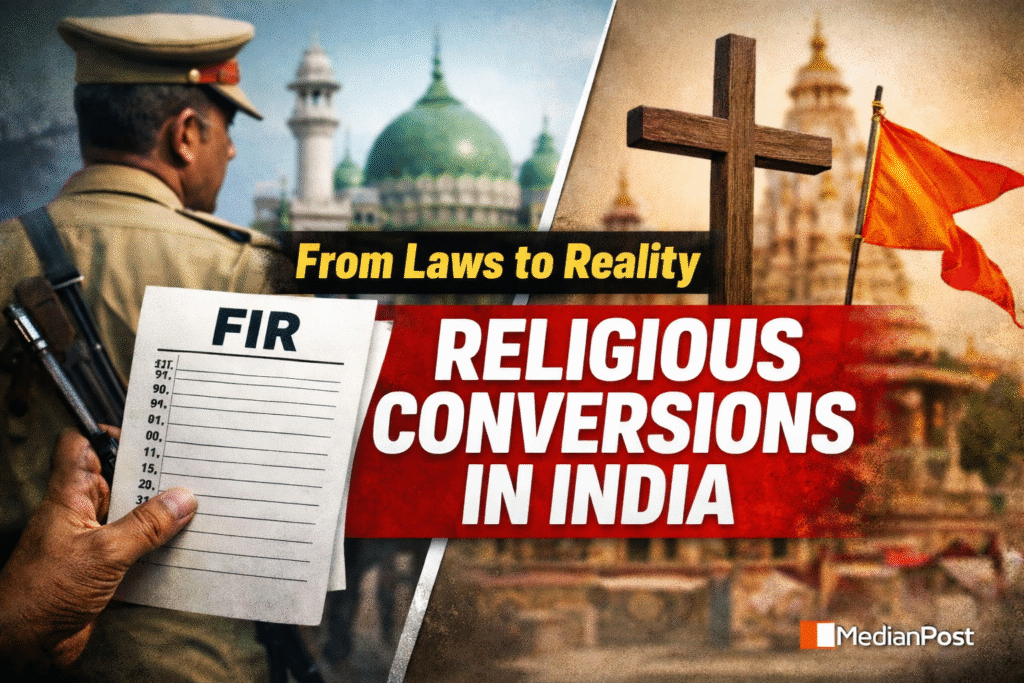
A Debate Driven by Noise
Religious conversion is back in the headlines. Political leaders warn of a growing threat, police stations report new cases, and television debates speak of organised networks. But away from the microphones and hashtags, the reality on the ground looks far less dramatic and far more complicated.
What the Laws Aim to Do
More than ten Indian states now have laws regulating religious conversion. The stated goal is to prevent conversions through force, fraud, or inducement. These laws promise strict punishment, especially in cases involving women, minors, and marginalised communities. On paper, the intent appears protective. On the ground, enforcement often raises questions.
FIRs Rise, Verdicts Don’t
Government replies in state assemblies and court records show a clear trend. FIRs under anti-conversion laws have increased over the years. Convictions, however, remain rare. Lawyers handling such cases say evidence is often weak and difficult to prove. Many cases drag on for years before ending in acquittal or closure, long after public attention has moved on.
Who Actually Complains
In a large number of cases, the person who allegedly converted is not the complainant. Complaints are often filed by family members, neighbours, or local groups. Adults who say they changed faith by choice frequently find their consent questioned. This has sparked a wider debate about personal agency and the limits of state intervention.
The Claim of “Mass Conversions”
Political speeches often refer to organised or mass conversions. Yet there is no consolidated national data to back such claims. Most recorded cases involve individuals or small groups, often connected to interfaith marriages or personal belief. In the absence of transparent data, perception fills the gap left by facts.
Elections and the Timing Factor
Conversion-related cases and statements tend to peak during election seasons. Police action becomes more visible, leaders speak more sharply, and media coverage intensifies. Once elections pass, the issue loses urgency, even as cases continue quietly through the legal system.
Fear of Belief Under Watch
Civil liberties groups have raised concerns over rules that require advance notice or permission before conversion. For many citizens, this feels like belief itself is being monitored. Critics argue such procedures discourage voluntary conversions and create unnecessary fear.
Where the Balance Is Lost
Forced conversions must be dealt with firmly—there is little disagreement on that. But when every conversion is treated as suspicious, the line between protection and control begins to blur. Laws meant to safeguard freedom risk shrinking it.
The Larger Question
The issue of religious conversion sits at the crossroads of faith, law, and politics. It demands facts, restraint, and honesty. Without that, the debate risks being shaped more by slogans than by reality.