


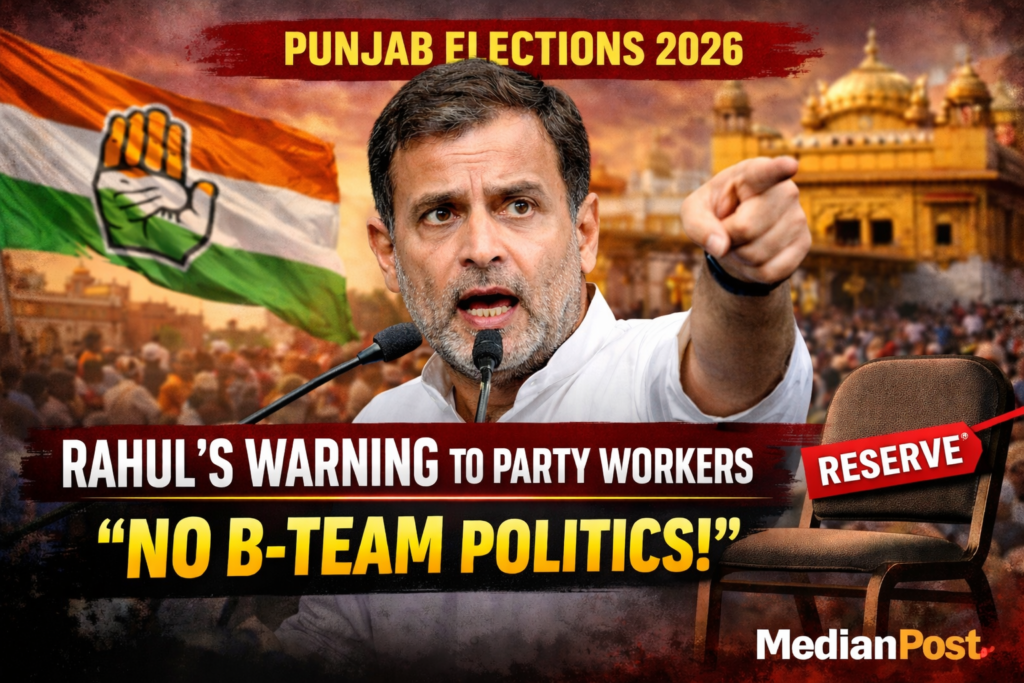
As the Assembly elections draw closer in Punjab, the political atmosphere is no longer calm or routine. There is a visible shift on the ground party offices are more active, district-level meetings are increasing, and leaders are making frequent visits to constituencies. Conversations among voters are slowly moving from daily issues to bigger questions about leadership and direction. In this evolving scenario, every public appearance by a senior leader is being closely watched.
One such moment came during a recent rally addressed by Congress leader Rahul Gandhi, which has now become a major point of discussion in political circles.
A Rally That Focused on Internal Strength
While election rallies often revolve around attacking rival parties, Rahul Gandhi’s speech took a slightly different turn. Along with raising political issues, he reportedly addressed concerns within his own party. His warning against “B-team” politics was seen as a clear message to leaders and workers to avoid any actions that could indirectly harm the party’s prospects.
The tone appeared serious rather than dramatic. It suggested that the leadership is aware of the importance of internal discipline at a time when every vote and every constituency matters. Punjab has witnessed complex political equations in the past, where internal disagreements have sometimes influenced outcomes. By speaking openly about unity, Gandhi seemed to underline that this election demands collective responsibility.
The Road Ahead
Political observers believe such messaging is aimed at strengthening coordination before the campaign reaches its peak. Elections are not only about speeches and headlines; they are also about silent groundwork, booth management, and trust among party ranks.
As Punjab moves steadily toward polling day, the coming weeks will reveal how effectively parties manage both their external campaign and internal dynamics. For now, the focus remains clear unity within could be the deciding factor in a tightly contested electoral battle.