


The Mood Before the Battle
Punjab may still be months away from its next Assembly election, but the political undercurrent is already visible. In tea shops, farmers’ gatherings, and city marketplaces, conversations have quietly shifted toward one question who will govern Punjab next?
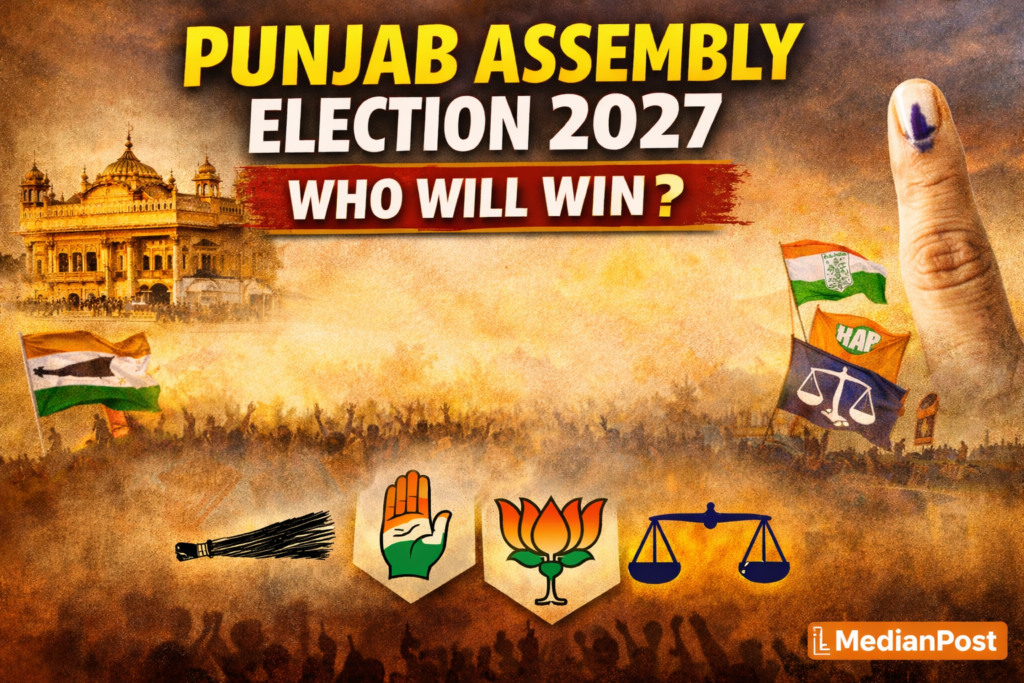
The major players Aam Aadmi Party (AAP), Indian National Congress (Congress), Bharatiya Janata Party (BJP), and Shiromani Akali Dal (SAD) are all recalibrating their strategies. Public rallies may not be at full throttle yet, but behind closed doors, preparations are very much underway.
AAP: Advantage of Power, Burden of Expectations
For AAP, the election will be a test of performance. As the ruling party, it can point to welfare schemes, free electricity, school reforms, and healthcare improvements. Many beneficiaries credit the government for easing household expenses.
But power also brings pressure. Complaints related to unemployment, crime, and the persistent drug issue continue to echo across districts. If voters feel that expectations have not been fully met, anti-incumbency could quietly build momentum. Still, at this early stage, AAP appears to hold a slight edge largely because it controls the narrative of governance.
Congress: Waiting for the Right Moment
Congress senses opportunity. With a history deeply tied to Punjab’s political fabric, particularly in rural regions, the party believes the ground is not lost. Its challenge lies in unity and leadership clarity. If internal rivalries stay contained, Congress could emerge as the main challenger, making the contest largely bipolar in many constituencies.
BJP and Akali Dal: The X-Factors
The BJP continues working to expand its urban footprint, while keeping alliance options open. Meanwhile, the Shiromani Akali Dal faces perhaps its most crucial election in years, seeking to reconnect with its traditional support base.
An Election That Could Shift Quickly
At the moment, political observers see the primary fight shaping up between AAP and Congress. Yet Punjab has a history of surprising verdicts. Campaign narratives, local candidates, and shifting voter emotions will ultimately decide who truly gains the upper hand when ballots are cast.