


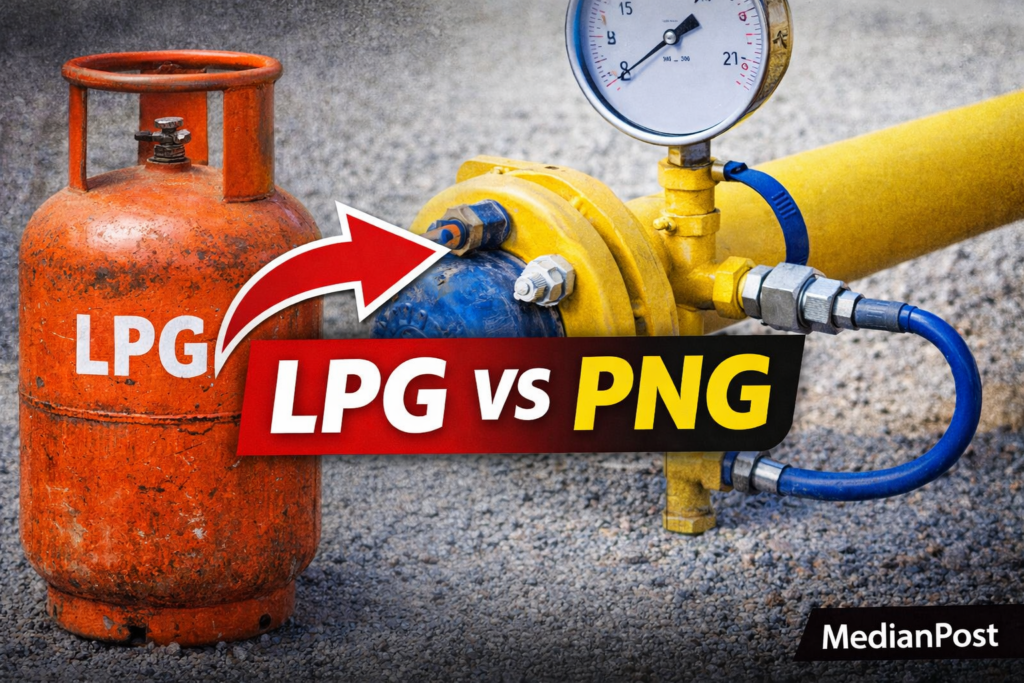
A quiet but important shift is beginning in how Indian households may cook their daily meals. The government has started strongly encouraging people to move from LPG cylinders to Piped Natural Gas (PNG), wherever the facility is available.
The push is not random. One of the biggest reasons is that nearly 50% of PNG is produced within India itself. That means less dependence on imports and better control over supply. LPG, on the other hand, is heavily dependent on global markets, which often leads to unpredictable price changes.
What has caught attention is the government’s firm messaging around this transition. In some places, residents are being told to switch to PNG if it is available or risk losing access to LPG connections in the future. While this is still not a strict nationwide rule, it clearly shows the direction policy makers want to take.
For common consumers, the difference between LPG and PNG is quite practical. LPG comes in cylinders that need to be booked, delivered, and replaced regularly. PNG, in contrast, is supplied directly through pipelines, offering a continuous flow of gas without the hassle of refills.
Safety is another factor being highlighted. PNG is lighter than air, so in case of a leak, it disperses quickly instead of settling, reducing the risk of major accidents. LPG, being heavier, can accumulate and become more dangerous if not handled properly.
Right now, PNG is mostly available in select cities and a limited number of residential societies. However, the network is slowly expanding as infrastructure improves.As this shift gains momentum, many households may soon have to decide stick with the familiar LPG cylinder or move towards a more stable and potentially safer PNG connection.