


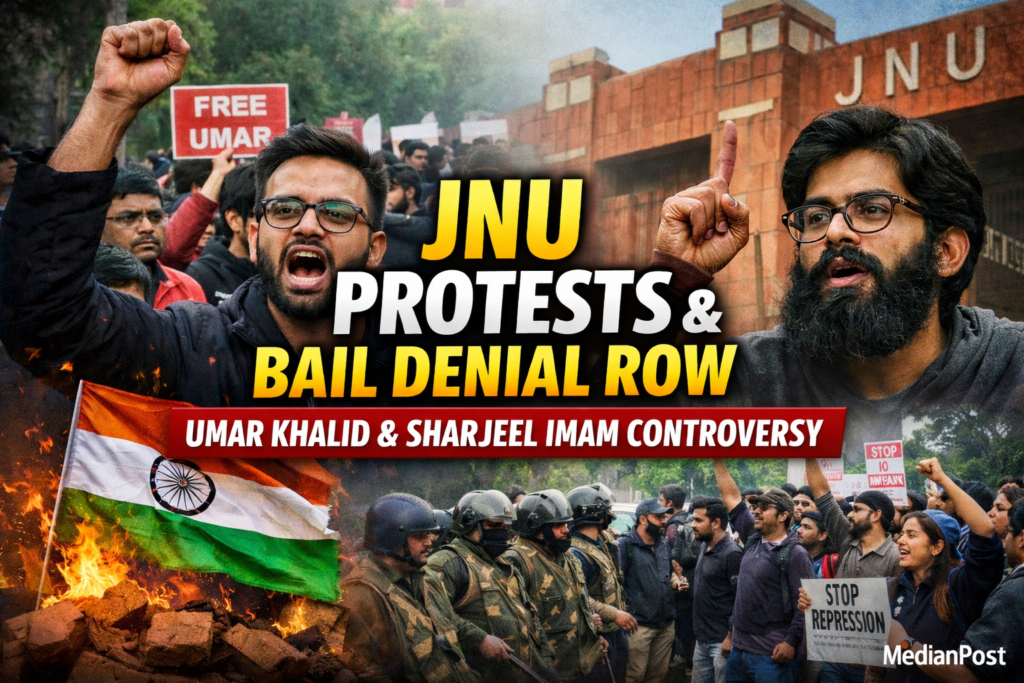
Jawaharlal Nehru University has once again found itself at the centre of a national political debate after protests erupted on campus following the denial of bail to former students Umar Khalid and Sharjeel Imam. The demonstrations have revived long-standing allegations of anti-India activities and ideological radicalism associated with the university.
Demonstrations Over Bail Denial
Protests were held at JNU earlier this month after courts refused to grant bail to Umar Khalid and Sharjeel Imam in their respective cases. Several student organisations gathered inside the campus, raising slogans and demanding their release. Protesters described the continued incarceration as unjust and claimed it reflected a shrinking space for dissent.
Political Attention and Criticism
The demonstrations quickly drew political attention, reigniting criticism of JNU from leaders of the ruling party. They accused sections of the campus of repeatedly supporting individuals facing serious charges and allowing protests that, according to them, raise questions about national unity and security.
JNU’s History of Activism
JNU has a long history of student activism and ideological politics, often placing it at the centre of national controversies. Supporters of the university argue that it represents a space for critical thinking and constitutional dissent, while critics maintain that some forms of activism on campus have crossed acceptable limits.
Cases Against Umar Khalid and Sharjeel Imam
Umar Khalid and Sharjeel Imam, both former JNU students and once prominent figures in campus politics, are facing serious allegations in separate cases related to alleged inflammatory speeches and actions. Authorities claim these actions could disturb public order and affect the integrity of the nation. While both have denied the allegations, courts have so far declined to grant them bail, citing the seriousness of the charges.
Opposition Defends Protests
Opposition parties and Left-leaning student organisations have defended the protests, arguing that demanding bail and questioning arrests fall within democratic rights. They have accused the government of using legal processes to suppress dissenting voices and intimidate political opposition.
University Response and Public Reaction
The JNU administration has not issued any fresh statement on the recent demonstrations, though it has earlier stated that the university follows established rules and acts in accordance with the law while protecting academic freedom. Public opinion remains sharply divided, with one section calling for strict action against what they perceive as anti-India activities, while another stresses due process and cautions against conclusions before judicial proceedings are completed.
A Broader National Debate
As political reactions continue and legal cases remain ongoing, the latest developments at JNU have once again highlighted the wider national debate over the limits of dissent, the role of universities in political expression, and the balance between freedom of speech and national security.