


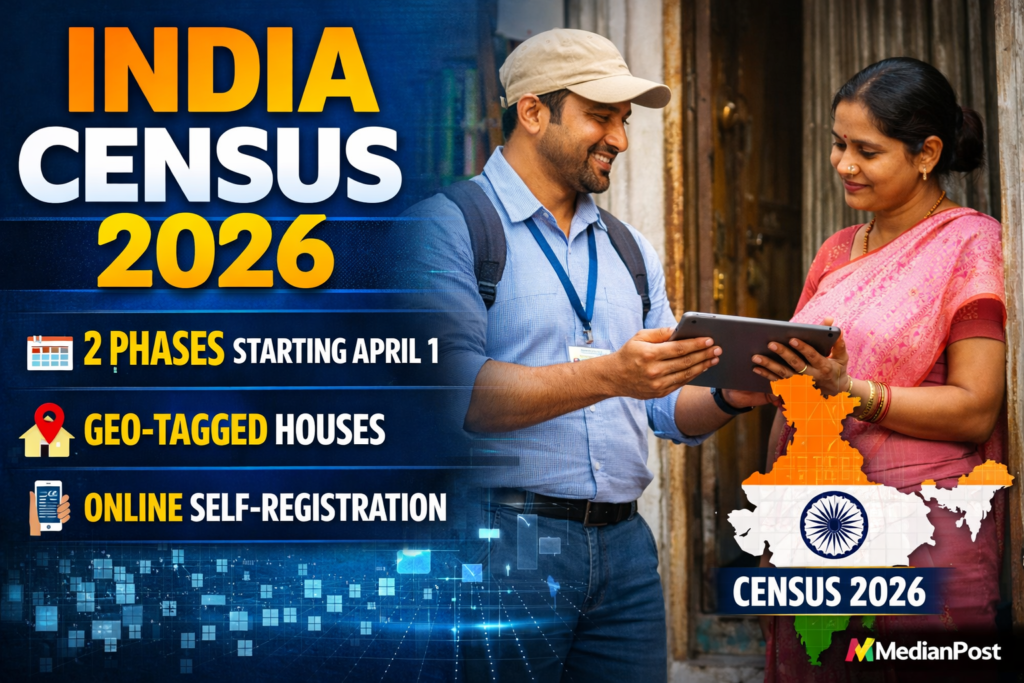
India is gearing up to roll out its nationwide census exercise from April 1, 2026, and this time, the process comes with a noticeable shift in both approach and mindset. While the core objective remains the same counting the population the way it will be done is evolving with the times.
The census will be carried out in two phases. The first phase, beginning April 1 and running until September 2026, will focus on listing households. Officials will go door-to-door, noting basic details such as house numbers, number of residents, gender, vehicles owned, and family structure.
What stands out this time is a subtle but important change in how relationships are being recorded. Live-in couples, which were earlier not clearly categorized, will now be included under the bracket of married couples. It’s a small update, but one that reflects how social realities in India are gradually changing.
The second phase, scheduled for March 2027, will move beyond basic details and capture deeper population data. This information plays a key role in how policies are shaped and how resources are distributed across the country.
Technology, however, is at the heart of this census. For the first time, every house will be digitally geo-tagged and assigned a unique identification number. This is expected to make mapping more precise and reduce errors that often come with large-scale data collection.
There’s also a new level of convenience being introduced. Citizens will have the option to fill in their own details online through a self-enumeration system, cutting down the need for complete dependence on field surveys. In many ways, this census is not just an administrative exerciseit signals India’s attempt to build a more accurate, inclusive, and digitally driven data system for the future.