
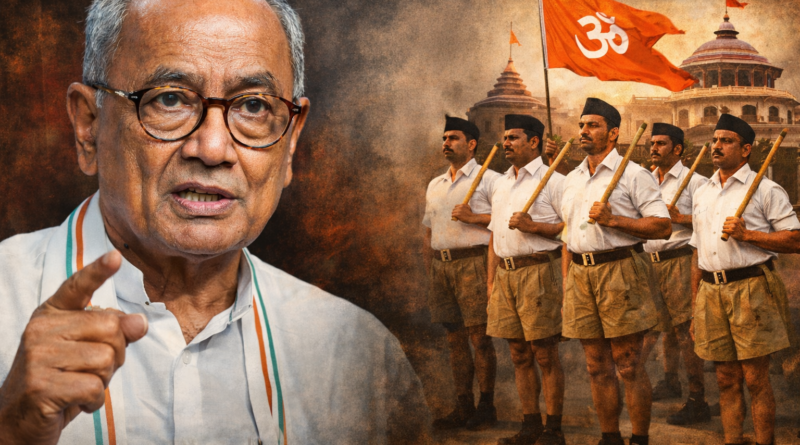
Digvijaya Singh Sparks Controversy over RSS Remarks: Why Congress Leaders Criticise the Sangh
Senior Congress leader Digvijaya Singh recently sparked political debate by sharing a throwback image of a young Narendra Modi, highlighting his rise from grassroots activism to national leadership. Singh described it as an example of “the power of organisation”, pointing to how structured, disciplined frameworks can propel leaders to the top.
The post, however, quickly drew criticism. Many interpreted it as praise for the RSS-BJP organisational model, triggering backlash from political opponents and analysts. Singh clarified that his remarks focused solely on organisational efficiency, not the ideology or political agenda of the RSS. He stressed that he remains firmly opposed to the Sangh’s ideology.
Organisation vs Ideology
For Singh, the message was about how strong organisational structures can shape leadership, not about endorsing RSS politics. Yet, in a party like Congress, which has historically positioned itself as secular and inclusive, even indirect references to the RSS naturally spark debate.
Within Congress, reactions were mixed. Some leaders saw Singh’s statement as a reminder for the party to strengthen its internal organisation. Shashi Tharoor called for better discipline and structured processes within Congress. Others, including Pawan Khera and Salman Khurshid, warned against taking cues from the RSS, emphasizing the ideological gulf between the two.
Ideological Divide Remains Sharp
The Congress-RSS divide is long-standing. While Congress promotes pluralism and secular values, the RSS cultural nationalism closely linked to Hindu identity. For many Congress leaders, the Sangh represents an ideology that runs counter to the country’s constitutional principles. Even when Singh’s comments focused on organisational aspects, they inevitably reignited ideological debates.
Political Fallout
BJP leaders seized on the controversy to highlight perceived internal contradictions within Congress. Analysts, however, view it as a chance for the party to introspect on organisational weaknesses while maintaining its ideological stance. Public discussion has centered on how political parties balance discipline, leadership development, and ideological coherence in a highly scrutinised environment.
Closure
Digvijaya Singh’s remarks were about organisation, not ideology, but they reopened conversations about the Congress-RSS divide. The episode highlights a core challenge for Indian politics: maintaining party cohesion, nurturing leadership, and staying true to ideological principles, all under the public eye.