


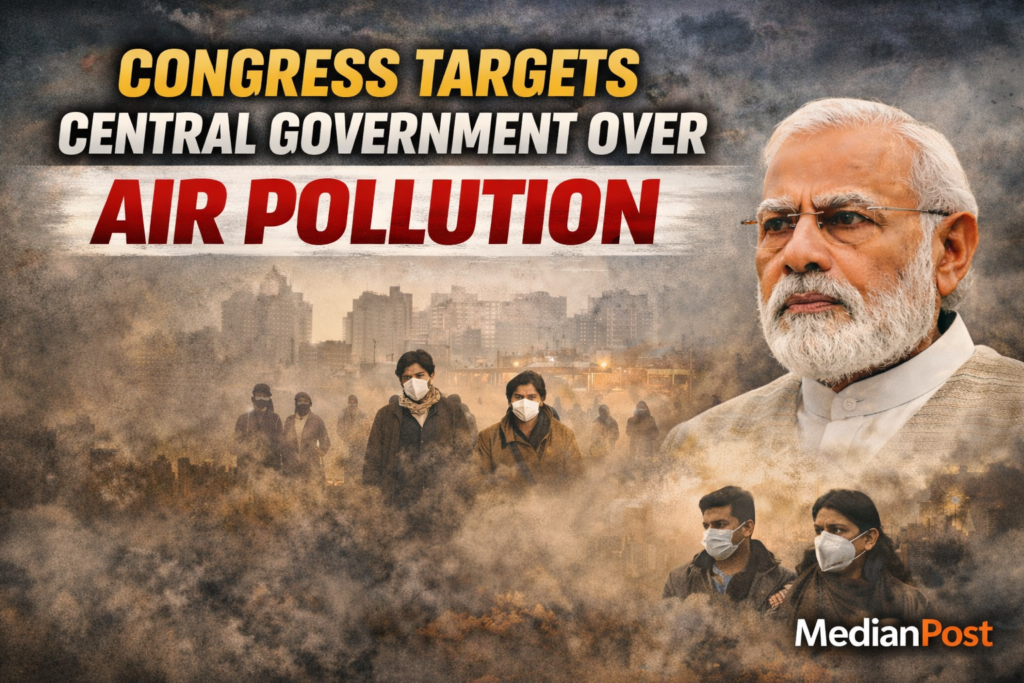
The Congress has launched a fresh attack on the central government over rising air pollution levels, citing a recent World Bank report that highlights the severe health impact of polluted air in northern India.
World Bank Report Raises Serious Concerns
According to the World Bank report, air pollution is linked to nearly 10 lakh premature deaths every year in northern India. The report points to prolonged exposure to toxic air as a major cause of respiratory diseases, heart conditions, and reduced life expectancy, especially in densely populated urban and semi-urban areas.
Congress Blames Policy Failure
Reacting to the findings, the Congress accused the central government of failing to address one of the country’s most serious public health crises. Senior Congress leaders said the report exposes “years of policy neglect” and claimed that government announcements on pollution control have not translated into real action on the ground.
“The data clearly shows that air pollution is not just an environmental issue but a life-and-death matter,” a Congress spokesperson said, demanding accountability and immediate corrective measures.
Focus on North India
The party highlighted that states in North India continue to suffer from hazardous air quality for long periods every year. Factors such as industrial emissions, vehicular pollution, crop residue burning, and construction dust were cited as key contributors, with insufficient coordination between central and state authorities worsening the situation.
Government Yet to Respond
At the time of reporting, the central government had not issued a detailed response to the Congress’ allegations. However, officials have earlier maintained that multiple initiatives, including clean air programmes and stricter emission norms, are being implemented to tackle pollution.
Political Debate Intensifies
With the World Bank report now part of the political debate, air pollution is once again emerging as a major national issue. Experts believe the data could increase pressure on the government to move beyond policy announcements and focus on measurable outcomes to protect public health.