


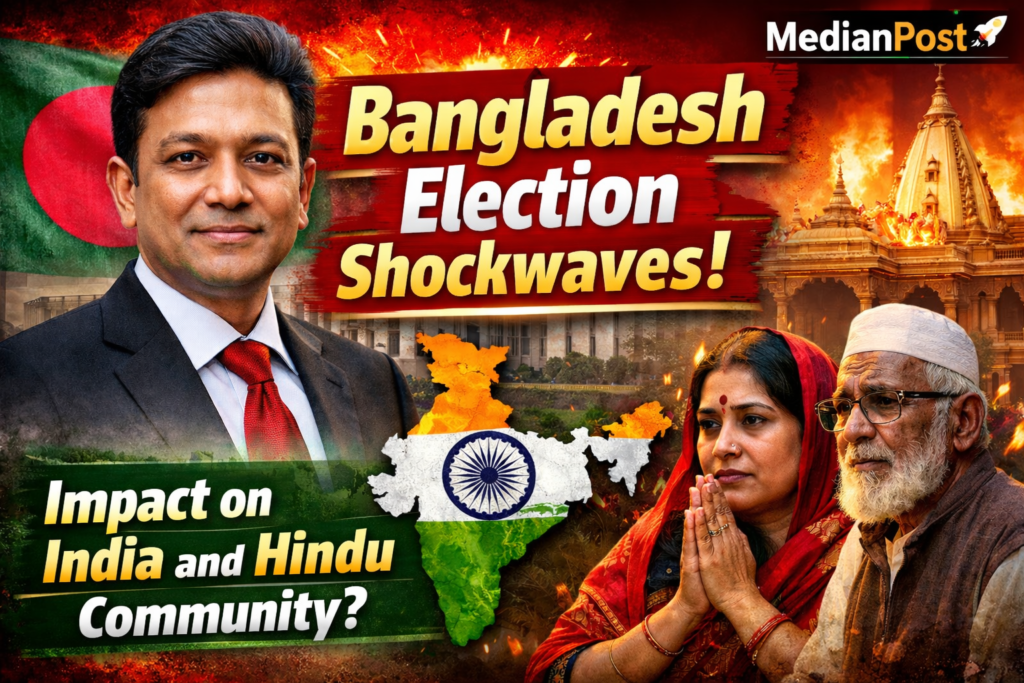
New Prime Minister Takes Charge
In the 2026 general elections of Bangladesh, Tarique Rahman emerged as the new Prime Minister-designate, leading the Bangladesh Nationalist Party (BNP) to a decisive victory. According to election results, the BNP won a strong majority in the 299-seat Jatiya Sangsad (parliament), securing over 200 seats, enough to form a stable government and take leadership of the country after years of political contention.
What the Victory Means for India
Bangladesh and India share one of South Asia’s most important bilateral relationships, involving trade, border cooperation, connectivity projects, and shared regional security interests. A government with a clear mandate can bring continuity to diplomatic ties if both sides engage constructively.
For India, stable leadership in Dhaka often translates into smoother coordination on cross-border issues, including management of border enclaves, water sharing, and connectivity corridors such as rail and transit routes. A cooperative Bangladesh government may ease tensions that periodically arise around migration and security in border states.
At the same time, developments in Bangladesh tend to enter political conversation in Indian states like West Bengal and Assam, where cultural and familial ties across the border are strong. Any reported policy shift from Dhaka can quickly become part of domestic political debate in India.
The Hindu Community Question
The condition of the Hindu minority in Bangladesh has periodically drawn attention in bilateral discussions. Whether the new government will take stronger steps to ensure protection and social inclusion for minorities depends on its domestic agenda and enforcement on the ground. Diplomatic engagement between India and Bangladesh is likely to include talks on minority rights, but concrete improvements will require sustained internal action.
Looking Ahead
The coming months will reveal how the new Prime Minister’s leadership shapes foreign policy and regional cooperation. India will closely watch Dhaka’s approach to bilateral ties, border management, and internal harmony as both neighbors navigate the post-election landscape.