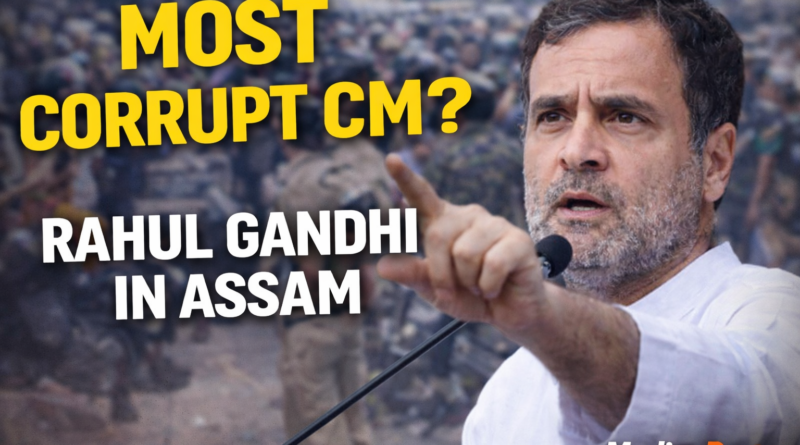
Rahul Gandhi Calls Assam CM ‘Most Corrupt’, Unveils Big Welfare Promises Ahead of Elections
With the Assam Assembly elections drawing closer, the political atmosphere in the state is clearly heating up. Congress leader Rahul Gandhi, during a high-energy rally, launched a sharp and direct attack on the state government, setting the tone for what could be an intense electoral battle.
Addressing a large crowd, Rahul Gandhi did not hold back as he targeted Chief Minister Himanta Biswa Sarma, calling him the “most corrupt Chief Minister.” The remark immediately drew loud reactions from the audience and quickly became the highlight of the rally.
But the speech wasn’t just about criticism. Rahul Gandhi also tried to position Congress as an alternative with a strong message on accountability. He said that if his party comes to power in Assam, a thorough investigation into alleged corruption cases would be carried out. “There will be accountability,” he stressed, making it clear that this would be a key part of Congress’s campaign.
One of the more notable points in his speech was the mention of Section 24A, which he said would be implemented to empower local communities. According to him, this provision would give people greater control over decisions affecting their rights and resources, strengthening grassroots participation.
Alongside political attacks, Rahul Gandhi also rolled out a series of welfare promises aimed at connecting with everyday voters. He spoke about financial assistance for women to support small businesses, proposing a monthly aid to help them become economically independent.
Healthcare was another major focus, with a promise of up to ₹25 lakh medical coverage for families. For senior citizens, he announced a monthly pension of ₹1,250, while also highlighting a plan to provide permanent land rights (patta) to around 10 lakh “bhumiputras” in the state.
These announcements suggest that Congress is trying to build a campaign that combines both strong political messaging and welfare-driven promises, especially targeting rural and economically weaker sections.
Meanwhile, the ruling party has dismissed the allegations, calling them politically motivated and questioning the practicality of the promises made during the rally. As Assam moves closer to the elections, such rallies are expected to play a crucial role in shaping public opinion. With both sides stepping up their efforts, the coming weeks are likely to witness an even sharper political contest.