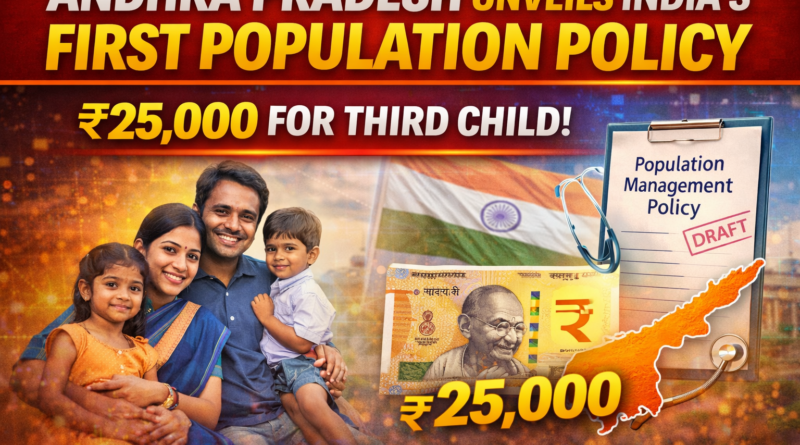
Andhra Pradesh Releases India’s First Population Management Policy Draft, ₹25,000 Incentive for Third Child
In a significant move, Andhra Pradesh has released the first draft of a Population Management Policy, making it the first Indian state to openly address the issue of falling birth rates through a dedicated policy. The draft focuses on encouraging families to have more children as the state’s fertility rate has been declining steadily in recent years. One of the major proposals in the policy is a financial incentive of ₹25,000 for families who have a third child.
Falling Birth Rate a Growing Concern
Officials and policymakers in Andhra Pradesh have raised concerns over the declining fertility rate. Earlier, the state’s fertility rate was around 2.5, which is considered healthy for maintaining a stable population. However, it has now reportedly fallen to around 1.5, which is below the replacement level. Experts warn that if this trend continues, the state could face challenges in the future, including an aging population and a shrinking workforce.
Key Highlights of the Draft Policy
To address the issue, the draft policy proposes several measures aimed at encouraging population growth. The most notable step is the ₹25,000 financial incentive for the birth of a third child. The government believes that such financial support could motivate families to consider having more children. The policy may also include better maternal healthcare, child welfare support, and awareness programs to support growing families.
Why the Policy Is Important
Population trends have a direct impact on economic growth, labor supply, and long-term development. By introducing this draft policy, Andhra Pradesh is trying to take a proactive step to maintain a balanced demographic structure and avoid future economic challenges.
The release of this draft policy has sparked discussions across the country. If implemented effectively, Andhra Pradesh’s approach could become an example for other states facing similar demographic challenges in the coming years.