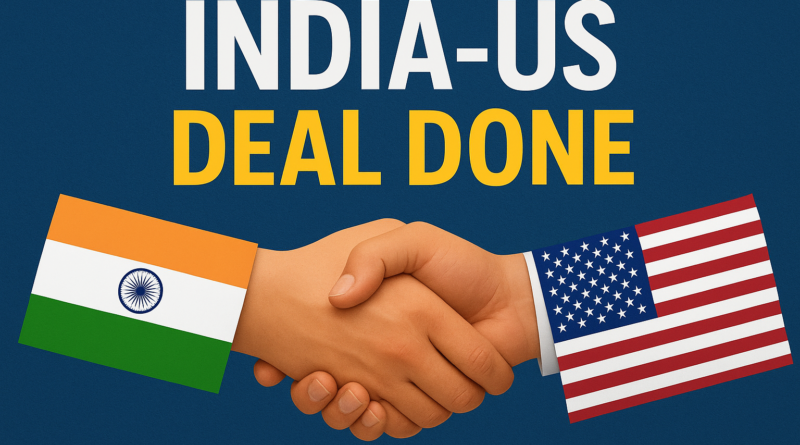
India–US Trade Deal Finalised, Sparks Political Debate Over Economic Impact at Home
The India–US trade deal has officially been signed, and the government has moved quickly to present it as a major achievement in India’s economic diplomacy. Senior leaders have said the agreement will improve market access for Indian exports and encourage higher levels of American investment. Sectors such as manufacturing, defence production, technology, and clean energy are expected to benefit, strengthening India’s position in global supply chains.
Opposition Seeks Transparency and Parliamentary Debate
Opposition parties have welcomed closer ties with the United States but have raised concerns about the lack of detailed public discussion. Leaders from the opposition argue that trade agreements of this scale have long-term consequences and should be debated thoroughly in Parliament. Questions have been raised about tariff concessions, agricultural provisions, and whether sufficient safeguards exist for domestic producers.
Farmers Emerge as a Political Flashpoint
Farmers have quickly become central to the political debate surrounding the India–US trade deal. Farmer groups have historically expressed apprehension over US trade agreements due to heavy subsidies given to American agriculture. Opposition leaders have warned that any negative impact on farm incomes could trigger political backlash, particularly in rural and agrarian states where electoral margins are often tight.
MSMEs and Domestic Industry Concerns
Small and medium enterprises are another focus of political reactions. Critics argue that MSMEs could face increased competition from large multinational companies if protective measures are weak. The government has countered these concerns, stating that the deal includes provisions aimed at strengthening domestic manufacturing and creating new opportunities rather than undermining local businesses.
Strategic Autonomy Debate Resurfaces
Beyond economics, the deal has revived discussion about India’s foreign policy orientation. Some opposition voices have cautioned against deeper economic dependence on the US, emphasising India’s long-standing commitment to strategic autonomy. Government sources have dismissed these concerns, insisting that the agreement does not compromise India’s independent decision-making.
Political Test Lies in Implementation
As the trade deal moves into the implementation phase, political scrutiny is expected to intensify. The ruling party is likely to highlight job creation and investment inflows, while the opposition will closely track its impact on prices, livelihoods, and small businesses. Ultimately, the India–US trade deal stands as both a diplomatic milestone and a political test whose success will be judged by voters.